
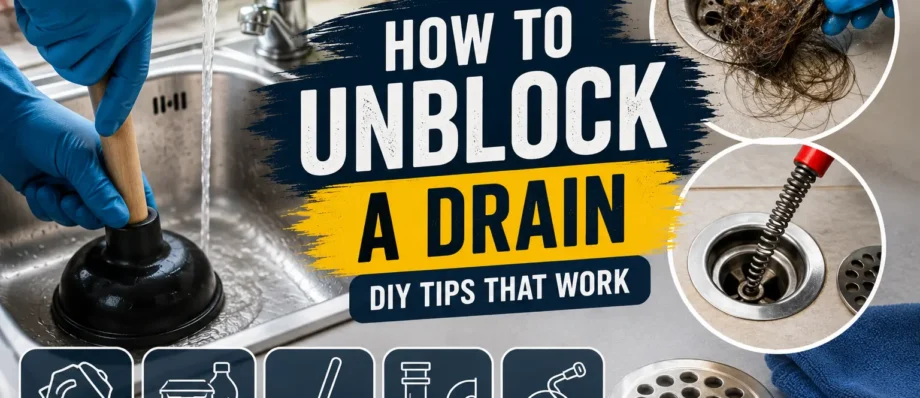
How to Unblock a Drain Without Calling a Plumber (UK Guide)
- July 9, 2026
- Plumbers
- 8 mins read
How to Unblock a Drain Without Calling a Plumber
A blocked drain is one of the most common plumbing problems in UK homes. Whether it’s a slow-draining kitchen sink, a blocked shower, or a bathroom basin that won’t empty properly, drain blockages can quickly become frustrating.
The good news is that many minor blockages can be cleared without calling a plumber. With the right tools and a few simple techniques, you may be able to restore normal drainage in just a few minutes.
However, not every blockage can be fixed with DIY methods. Knowing when to stop and call a professional is just as important as knowing how to start.
In this guide, you’ll learn:
- What causes blocked drains
- How to identify the type of blockage
- Safe DIY methods to unblock a drain
- Mistakes to avoid
- When to contact a professional plumber
What Causes a Blocked Drain?
Understanding the cause of the blockage can help you choose the most effective solution.
Common causes include:
Kitchen Drains
Kitchen sink blockages are usually caused by:
- Cooking grease
- Fat and oil
- Food scraps
- Coffee grounds
- Soap residue
Over time, these materials build up inside the pipe and restrict water flow.
Bathroom Drains
Bathroom drains often become blocked by:
- Hair
- Soap scum
- Toothpaste
- Shampoo residue
- Small objects such as cotton buds
Hair is one of the biggest causes of blocked shower and basin drains.
Outdoor Drains
External drains may become blocked because of:
- Leaves
- Mud
- Moss
- Tree roots
- Garden debris
Heavy rainfall can also contribute to drainage problems if gullies become clogged.
Signs Your Drain Is Blocked
A blockage doesn’t usually happen overnight.
Watch for these warning signs:
- Water draining slowly
- Gurgling noises
- Bad smells from the drain
- Water backing up
- Overflowing outdoor drains
- Standing water in sinks or showers
Acting early often makes the blockage easier to remove.
Before You Start
Before attempting any repair:
- Put on rubber gloves.
- Remove any standing water if possible.
- Open a nearby window if unpleasant odours are present.
- Avoid mixing different chemical drain cleaners.
If sewage is backing up into your home, stop immediately and contact a professional plumber.
Method 1 – Pour Boiling Water Down the Drain
For minor grease build-up, boiling water is often the simplest solution.
Best for:
- Kitchen sinks
- Soap residue
- Light grease build-up
How to do it:
- Boil a full kettle of water.
- Slowly pour half into the drain.
- Wait several minutes.
- Pour the remaining water down the drain.
- Test whether the water drains normally.
Avoid using boiling water on PVC pipework if you’re unsure of its condition, as excessive heat may damage older plastic fittings.
Method 2 – Baking Soda and Vinegar
This popular home remedy can help loosen light blockages.
You’ll need:
- Half a cup of baking soda
- Half a cup of white vinegar
- Hot water
Instructions
- Pour the baking soda into the drain.
- Add the vinegar.
- Allow the mixture to fizz for around 20–30 minutes.
- Flush the drain with hot water.
This method works best for small organic blockages and unpleasant smells.
Method 3 – Use a Plunger
A sink plunger creates suction that can dislodge many common blockages.
How to use it:
- Add enough water to cover the plunger cup.
- Place the plunger firmly over the drain.
- Pump up and down several times.
- Lift the plunger and check whether the water drains away.
You may need to repeat the process several times for stubborn blockages.
Method 4 – Remove Hair by Hand
Bathroom drains are frequently blocked by hair.
If your drain cover is removable:
- Lift the cover.
- Pull out any visible hair using gloved hands or tweezers.
- Dispose of the debris in a bin.
- Flush the drain with hot water.
A simple drain cleaning tool or plastic hair remover can also make this job easier.
Method 5 – Clean the Sink Trap
If your kitchen sink remains blocked, the problem may be inside the trap beneath the sink.
Before you begin:
- Place a bucket underneath.
- Keep a cloth nearby.
- Wear gloves.
Steps
- Unscrew the trap carefully.
- Empty the contents into the bucket.
- Remove any debris.
- Rinse the trap thoroughly.
- Refit the trap securely.
- Run water to check for leaks.
This is one of the most effective methods for clearing kitchen sink blockages caused by food waste or grease.
Method 6 – Use a Drain Snake
For deeper blockages, a drain snake (also called a drain auger) can help.
Suitable for:
- Hair blockages
- Soap build-up
- Kitchen waste
- Deeper pipe obstructions
Insert the snake slowly into the drain.
Rotate the handle gently until you feel resistance.
Continue turning while pulling the blockage back towards you.
Flush the drain with hot water afterwards to remove any remaining debris.
Should You Use Chemical Drain Cleaners?
Chemical drain cleaners are widely available, but they should be used with care.
While they can help dissolve certain blockages, they may also:
- Damage older pipework
- Harm the environment
- Cause burns if handled incorrectly
- Be ineffective against solid obstructions such as tree roots or large accumulations of grease
If you choose to use a chemical cleaner, always follow the manufacturer’s instructions and never mix different products together.
For recurring blockages, mechanical cleaning or professional drain clearing is often a safer and more effective option.
When DIY Won’t Solve the Problem
While many drain blockages can be cleared at home, some problems require professional equipment and expertise.
You should stop DIY attempts and contact a plumber if:
- Water backs up into multiple drains.
- The blockage keeps returning.
- You notice sewage smells inside your home.
- Outdoor drains are overflowing.
- Water drains very slowly after several cleaning attempts.
- You suspect tree roots have entered the drain.
- There is visible damage to the pipework.
Continuing to force water through a severely blocked drain may increase pressure inside the pipe and make the problem worse.
Signs of a More Serious Drain Problem
Sometimes a blocked drain is only a symptom of a larger issue.
Watch for these warning signs:
Multiple Blocked Fixtures
If your kitchen sink, bathroom sink and toilet all drain slowly, the blockage may be in the main drain rather than an individual waste pipe.
Bad Smells Throughout the House
Persistent foul odours could indicate:
- A blocked sewer pipe
- Damaged drainage
- Wastewater build-up
- Poor ventilation
Water Backing Up Elsewhere
If running your washing machine causes water to rise in the sink, or flushing the toilet causes the shower drain to overflow, the drainage system should be inspected by a professional.
Frequent Blockages
If you find yourself clearing the same drain every few weeks, there’s likely a deeper problem that DIY methods won’t resolve.
How Much Does Professional Drain Unblocking Cost?
If home remedies don’t work, hiring a plumber is often quicker and more effective.
Typical UK costs include:
| Service | Average Cost |
|---|---|
| Basic sink drain unblocking | £80–£150 |
| Toilet drain unblocking | £100–£200 |
| Outdoor drain clearing | £120–£300 |
| Emergency drain unblocking | £150–£350 |
| CCTV drain inspection | £150–£400 |
The final price depends on the location of the blockage, the equipment required, and whether the work is carried out during normal working hours or as an emergency.
How to Prevent Future Drain Blockages
Prevention is usually much easier and cheaper than dealing with a blocked drain.
In the Kitchen
Avoid putting the following down the sink:
- Cooking oil
- Fat and grease
- Coffee grounds
- Eggshells
- Rice and pasta
- Food scraps
Allow grease to cool before disposing of it in the bin rather than washing it down the drain.
In the Bathroom
Reduce blockages by:
- Using a hair catcher over the drain
- Removing hair regularly
- Avoiding flushing cotton buds or wipes
- Cleaning soap residue from plugholes
Even products labelled “flushable” can contribute to drain blockages and should be disposed of in a bin where possible.
Flush Drains Regularly
Every few weeks, flush kitchen and bathroom drains with hot water to help remove light grease and soap deposits before they become serious blockages.
Schedule Routine Maintenance
If your property has older plumbing or you’ve experienced repeated drainage problems, arranging periodic inspections can help identify issues before they become expensive repairs.
Common Drain Unblocking Mistakes
Many homeowners unintentionally make a blockage worse.
Avoid these common mistakes:
Using Too Much Force
Forcing drain rods or augers aggressively can damage pipework, particularly in older properties.
Mixing Chemicals
Never combine different drain cleaning products.
Mixing chemicals can create dangerous fumes and increase the risk of injury.
Ignoring Slow Drains
A slow drain is often the first sign of a developing blockage.
Addressing it early is usually easier than waiting for the pipe to become completely blocked.
Pouring Grease Down the Sink
Hot grease may flow down the drain as a liquid, but it quickly cools and solidifies inside the pipe.
Over time, this creates stubborn blockages that often require professional removal.
Frequently Asked Questions
What is the easiest way to unblock a drain?
For minor blockages, hot water followed by baking soda and vinegar is often enough to restore normal drainage. If that doesn’t work, a plunger or drain snake may help.
Is boiling water safe for all drains?
Boiling water can be effective for grease build-up in many kitchen sinks, but it should be used with caution on older plastic pipework. If you’re unsure about your plumbing, use hot (rather than boiling) water.
Are chemical drain cleaners safe?
When used correctly, they may help dissolve some blockages. However, repeated use can damage certain pipes and they are rarely effective against severe obstructions such as tree roots or compacted debris.
Why does my drain keep blocking?
Recurring blockages may indicate:
- Damaged pipework
- Tree root intrusion
- Incorrect pipe gradients
- Heavy grease build-up
- A blockage deeper within the drainage system
A professional inspection can identify the underlying cause.
When should I call a plumber?
Contact a plumber if:
- Water backs up into your home.
- DIY methods fail.
- The blockage keeps returning.
- Multiple drains are affected.
- You suspect a sewer or underground drainage problem.
Final Thoughts
Most blocked drains start as small problems that gradually worsen over time.
By recognising the early warning signs and using safe DIY methods, many homeowners can clear minor blockages without professional help.
However, if the blockage is severe, repeatedly returns, or affects multiple drains, it’s usually more cost-effective to have the problem assessed by an experienced plumber.
Using the right equipment, professional plumbers can quickly identify the cause of the blockage and restore your drainage system safely.
If you need expert assistance, use our plumbing directory to compare trusted local plumbers, read verified customer reviews, and find reliable drain unblocking services near you.

